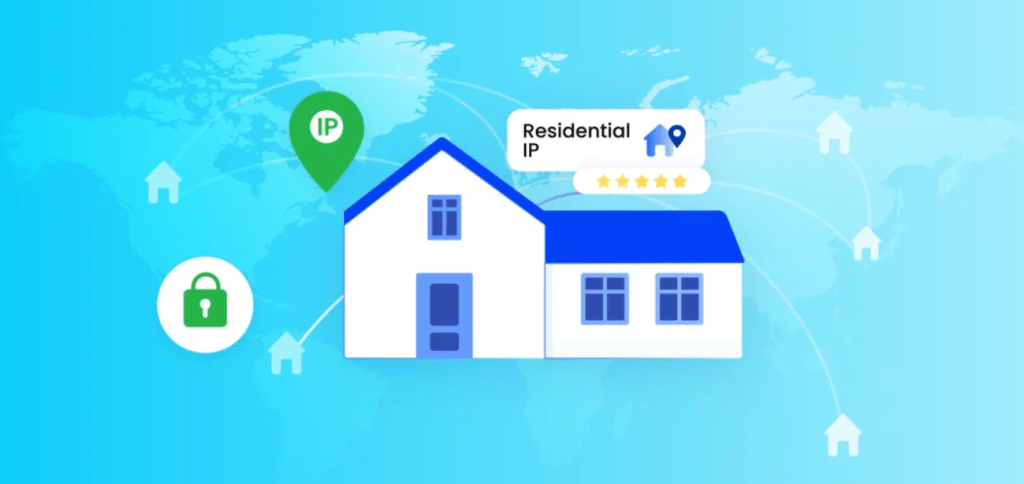
Residential proxies are often marketed as the safest way to disguise your online identity. They use IP addresses from real households, making them appear indistinguishable from everyday internet users. But in 2025, detection technologies have advanced so much that even the best residential proxies face challenges.
Why Detection Has Become More Sophisticated
In the early days, most websites relied on simple IP blocklists. If an address was linked to spam or abuse, it got blocked. Now, platforms combine multiple detection layers, from AI-powered traffic analysis to cross-device fingerprint matching. This means that while a residential IP may look legitimate on the surface, unusual patterns beneath can still trigger suspicion.
Key advancements include:
- AI-driven anomaly detection – Algorithms learn what “normal” traffic looks like and flag outliers in real time.
- Cross-session analysis – Sites track multiple sessions from the same user across different IPs, identifying automation patterns.
- Behavioral biometrics – Mouse movement, scrolling patterns, and typing speed are used to differentiate humans from bots.
Real-World Scenarios Where Detection Happens
- E-commerce Price Scraping
A retailer uses residential proxies to gather competitor pricing. If they scrape too fast, or at consistent intervals, the target site’s monitoring tools detect the unusual load and start blocking IPs. - Ad Verification
Marketing teams check ad placements worldwide. While residential proxies help appear local, mismatched browser language or repeated identical requests from the same IP can still raise alerts. - Social Media Automation
Automated posting or account creation from residential IPs is common. But social platforms monitor sign-up velocity, device fingerprint consistency, and login locations—making proxy use easier to spot.
Common Red Flags That Lead to Detection
- IP Pool Overuse – When too many users share the same residential IP range, detection risk spikes.
- Inconsistent Geo Signals – A U.S. IP paired with an Asia-based time zone often gets flagged.
- Predictable Request Patterns – Even genuine IPs are suspicious if they interact with a site in perfectly timed intervals.
Strategies to Stay Under the Radar
- Spread Requests Across Multiple IPs – Don’t let one IP carry heavy traffic.
- Rotate Smartly, Not Excessively – Sudden IP changes mid-task can look artificial; maintain sticky sessions when possible.
- Align Browser Environment with IP Location – Match time zones, languages, and OS settings to appear more authentic.
- Slow Down Automation – Human behavior is irregular; build delays and randomness into scripts.
The Uncomfortable Truth
Residential proxies are still the closest you can get to looking like a real user—but “closest” doesn’t mean invisible. Detection tools in 2025 don’t just see where you’re connecting from; they also see how you behave online. Whether you’re doing competitive intelligence, market research, or bypassing geo-blocks, the safest approach is to combine quality proxies with realistic usage patterns.




 PROXY SERVERS
Leave a comment