
Today, proxy servers have become an essential part of online operations. Whether for simple web browsing or more advanced tasks like social media management, web scraping, gambling, gaming, or accessing geo-restricted content, proxies are used across various industries.
However, many users—even experienced ones—often feel confused when it comes to choosing between proxy types. What exactly are datacenter proxies, residential proxies, and which one is better for your specific use case? Choosing the right proxy isn’t always easy. Even professionals sometimes struggle to decide whether to invest in residential ISP proxies or if a datacenter proxy is sufficient.
In this article, we’ll help you understand the key differences between datacenter proxies (including IPv4 and IPv6) and residential ISP proxies, and how to choose the best one for your needs.
What Is a Datacenter Proxy?
A datacenter proxy is hosted on servers located in high-performance data centers. It acts as an intermediary between the user and the internet, allowing access to geo-blocked content and bypassing certain restrictions.
Datacenter proxies are known for:
- High performance
- Fast speeds
- Affordable pricing
These proxies are commonly used for:
- Anonymous web browsing
- Unblocking restricted content
- Online gambling
- Gaming and streaming
Datacenter IPv4 vs. IPv6 Proxies
Datacenter proxies are typically available in two formats:
- IPv4 proxies allow access to nearly all websites on the internet.
- IPv6 proxies are limited to major platforms like Facebook, YouTube, and Google. Because of this limitation, IPv6 proxies are usually cheaper than IPv4.
Types of Datacenter Proxies
- Dedicated Datacenter Proxies: Exclusively assigned to one user or one domain for a specific time. Ideal for SEO tools and social media automation.
- Shared Datacenter Proxies: Used by multiple users at once. These are budget-friendly and fit for small businesses with limited proxy needs.
- Public Datacenter Proxies: Free proxies with minimal performance or security. Useful for very basic location switching, but not recommended for sensitive tasks.
Advantages of Datacenter Proxies
- Geographic flexibility for accessing region-locked content
- Cost-effective, especially for bulk proxy users
- High uptime and stable connectivity
- Fast connection speeds with robust infrastructure
- Large IP pools to reduce bans or detection
Disadvantages of Datacenter Proxies
- Lack of residential association makes them more detectable
- Unsuitable for sensitive activities like account creation or CAPTCHA-heavy environments
What Is a Residential ISP Proxy?
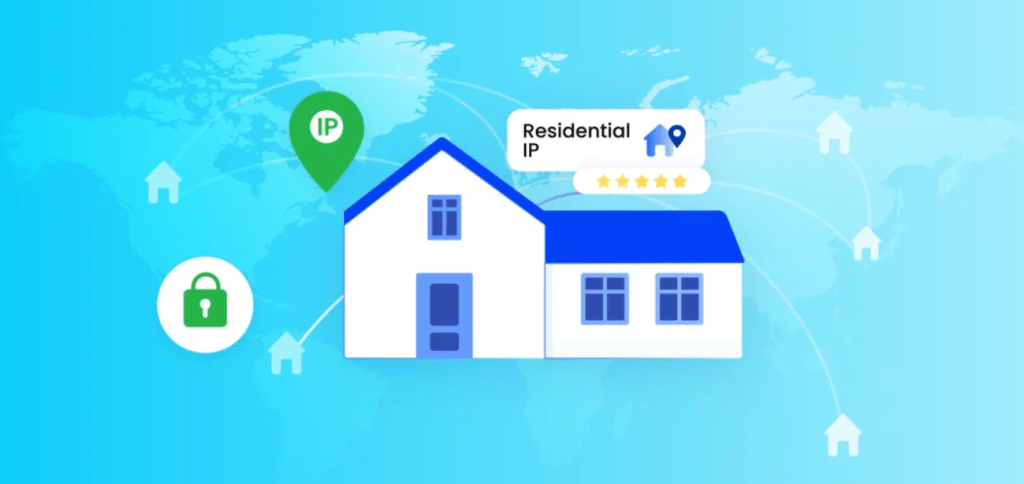
A residential ISP proxy is a proxy that uses an IP address leased from an Internet Service Provider (ISP), making it appear as if the user is a real residential user. Though they are often hosted in data centers, target websites treat them as genuine residential traffic, making them more trustworthy.
This combination of datacenter performance with residential legitimacy makes residential ISP proxies highly valuable for tasks requiring high anonymity and reliability.
Use Cases for Residential ISP Proxies
- Web Scraping: ISP proxies help reduce CAPTCHA rates due to their natural behavior patterns and high trust score.
- Sneaker Sites: Websites like Nike, Adidas, and Footlocker are highly protected; ISP proxies make your IP look like a legitimate user, increasing success rates.
- Social Media Monitoring: Managing multiple accounts from the same IP can get you banned. ISP proxies allow you to bypass social platform detection by rotating through residential IPs.
Datacenter Proxies vs. Residential ISP Proxies: A Comparison
| Feature | Datacenter Proxy | Residential ISP Proxy |
|---|---|---|
| Host Location | Datacenter | Datacenter (leased from ISPs) |
| IP Type | Non-residential | Real residential IPs |
| Speed | Very Fast | Fast |
| Cost | Affordable | Higher |
| Detection Risk | Medium to High | Very Low |
| Best for | General anonymity, streaming, SEO bots | Web scraping, social media, e-commerce tasks |
| IP Trust Score | Medium | High |
| CAPTCHA Frequency | High (especially under load) | Low |
| Geographic Diversity | Wide selection available | More limited per location |
| IP Pool Size | Large | Moderate |
Advantages of Residential ISP Proxies
- Real residential IPs provided by ISPs
- Lower risk of detection due to high IP trust
- Best suited for automation in social media, web scraping, and market research
- Fast and stable connections with datacenter-level infrastructure
Disadvantages
- Higher cost than datacenter proxies
- Fewer IPs per location, limiting geographic options
Which Proxy Type Should You Choose?
If your goal is general browsing, unblocking content, or streaming, datacenter proxies are usually sufficient.
If you need to:
- Scrape data at scale,
- Manage multiple accounts,
- Automate high-risk tasks,
- Avoid CAPTCHA and IP bans,
…then residential ISP proxies are the smarter choice.
Final Advice
Ultimately, the best proxy for you depends on your specific goals. Whether it’s IPv4 vs. IPv6, datacenter vs. residential, or shared vs. dedicated, your success depends on aligning the proxy type with your use case.
Whenever possible, choose private proxies from reputable proxy providers with responsive support and secure infrastructure. A quality proxy is an investment that can greatly improve your success rate—whether you’re scraping millions of pages or managing thousands of accounts.




 PROXY SERVERS
Leave a comment